

This site is no longer active!
If you are the owner, you must reactive this site for it to be published again
or contact us at support@rebolthq.com

If you are the owner, you must reactive this site for it to be published again
Learn how to clean oil stains off your driveway, when to call for professional pressure washing, and why following up with paver sealing helps protect against future spills.
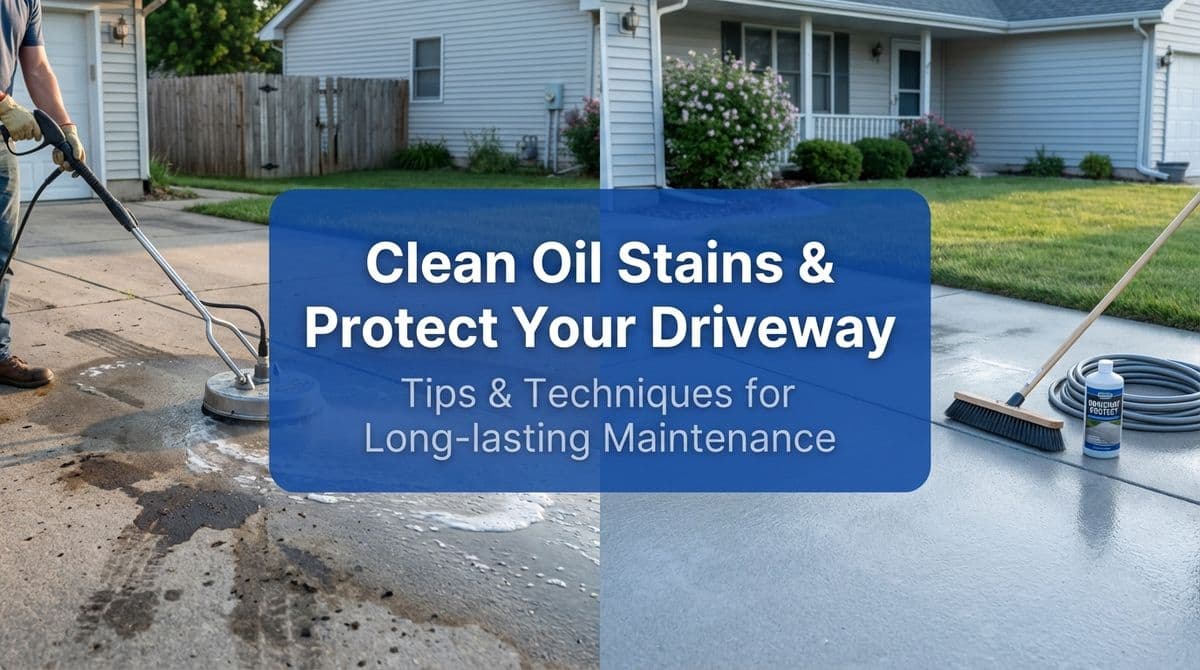
We recently got a call from a customer — let's call him Mark — who sounded a little stressed. One of his cars had broken down in the driveway, leaked oil everywhere, and left a dark, ugly stain right in front of the house. He told us he needed the driveway pressure washed and the pavers sealed, and that it was pretty urgent.
As we talked through what happened, we realized Mark was dealing with something we see all the time: an oil spill that looks “just cosmetic” but can actually soak into concrete or pavers, weaken the surface over time, and make the whole driveway harder to keep clean.
In this post, I’ll walk you through the same advice we shared with him: how to clean oil stains off your driveway yourself, when it’s time to bring in professional pressure washing, and why following up with paver sealing can save you headaches down the road.
Before you tackle an oil stain, take a quick look at your driveway material. With Mark, we started by asking a simple question: “Are we working with concrete, brick pavers, or stone?” Different surfaces can handle different levels of pressure and chemicals.
Most homeowners have one of these:
If you’re not sure, snap a photo and compare it to examples online, or ask a professional before using heavy-duty cleaners or high pressure. Using the wrong method can etch concrete, dislodge paver sand, or dull stone.
With Mark, the car had just been towed away, so the oil was still fairly fresh. That’s actually good news — fresh oil is much easier to deal with than a stain that’s been baking in the sun for months.
Here’s what we recommend doing immediately after a spill:
This won’t remove the stain completely, but it gives you a head start and keeps the oil from penetrating deeper into the surface.
After the first cleanup, Mark asked a common question: “Can I try to handle the rest myself before you come out?” The answer is yes — as long as you’re careful and realistic about what home methods can do.
For lighter oil stains, you can try:
Important: Always test a small, hidden area first, especially with pavers or natural stone. Some cleaners can lighten the surface or change the finish.
By the time Mark finished his first round of cleanup, the driveway looked a little better, but a large dark shadow was still very visible. That’s when he decided to move forward with professional pressure washing.
Here are a few signs it’s time to call in a pro:
We use a combination of professional-grade degreasers and the right pressure settings for each surface. On pavers, for example, we’re careful not to blast out too much joint sand, while still drawing out as much embedded oil as possible.
One thing we explained to Mark is that even with a thorough professional cleaning, some deep oil stains may not disappear 100%. Oil can soak into the pores of concrete or pavers and leave a faint shadow.
That’s where managing expectations — and planning the next step — really matters. Pressure washing is about removing as much contaminant as possible and preparing the surface for protection. That protection comes from sealing.
Mark originally called not just for cleaning, but also for paver sealing. He had the right idea. Once your driveway is thoroughly cleaned and fully dry, sealing helps in a few important ways:
For Mark’s driveway, our plan was to pressure wash first, allow proper drying time (usually 24–48 hours depending on weather and humidity), then apply a high-quality sealer suited to his specific paver material.
Over the years, we’ve seen a few DIY attempts that made things harder than they needed to be. Here are some pitfalls to avoid:
After we scheduled Mark’s appointment, he asked, “What can I do so this doesn’t happen again?” We love that question, because prevention is always easier than repair.
Here are a few simple habits that help:
If you’re staring at a stubborn oil stain and wondering whether you should scrub it yourself, rent a machine, or call someone out, you’re not alone. Mark started with the same questions.
Our usual approach is to assess the type of surface, the age and size of the stain, and any previous coatings or sealers. From there, we can recommend a realistic plan: what you can try on your own, what we can do with professional pressure washing, and whether sealing afterward makes sense for your driveway.
Oil stains are annoying, but they don’t have to be permanent. With the right steps — quick cleanup, proper washing, and smart sealing — your driveway can look clean, stay protected, and be ready for whatever your vehicles throw at it next.